Yavapai County, which encompasses Prescott, is known for its rich array of petroglyphs.
Sometimes, hiking just isn’t enough for outdoors men and women. You need a side dish. Maybe that’s a side of rock hounding, fishing, or in this case, petroglyphs.
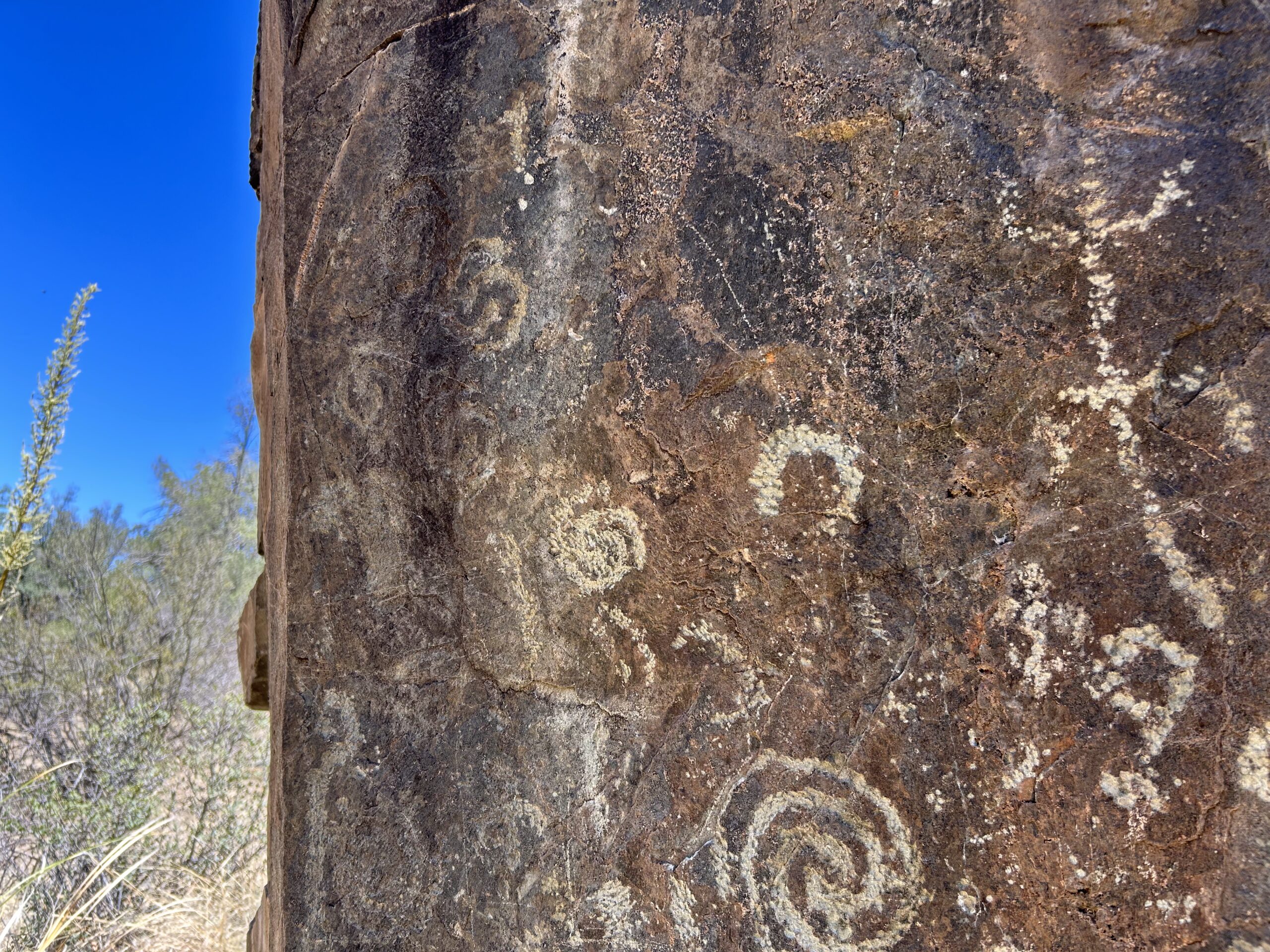
What’s a petroglyph? The word “petroglyph” comes from the Greek works “petro”, meaning “stone,” and “glyph,” meaning “carving.” Tribal communities of hundred or thousands of year ago would chip away at these rocks with handmade tools to explore the lighter rock under the surface and create images such as animals (often bighorn sheep and deer, eagles, or lizards), spirals (perhaps meaning cycles of life’s journeys, seasons, or pathways between spiritual worlds), cosmology or water sources; human figures (spiritual, maybe) and other abstract designs.

While I won’t give away this particular hiking spot in Prescott Valley, you can be sure “petros” are a potential jewel to find at many rock-ridden hiking trails in the valley.
Arizona Highways published fascinating information about these “writings on the walls.” Learn more.
Here are a few more images of these images from a recent hike of mine that added history and imagination to the hike. What were they trying to tell us so many years ago? Let me know in the comments.